New Puppy Tips
Are you planning to bring a new puppy home soon? Maybe you recently added a new four-legged member to your family. Sometimes we think we’ve got this new puppy parent role in the bag, and you’ve realized you are in over your head. Whatever your next step is, Full House Dog Training wants to help alleviate your frustrations and reduce your stress, and, hey, let’s make this fun along the way!
#1 – THE ESSENTIALS TO A GREAT START
- Collar or harness and leash – a simple flat buckle collar is all you need to start getting our puppy used to this new accessory around their neck. If you have a tiny puppy, a harness maybe a good option since its small neck is fragile and you may have a hard time finding a collar. A harness is fine for all size puppies at this early age.
- Collar size needs to properly fit so there is room to grow, because grow your puppy will, and quickly. Collar shouldn’t pull over your puppy’s ears.
- A 6’ nylon leash is a great option for young puppies.
- Food bowls – recommend stainless steel bowls because they are easy to clean, won’t break and will last a lifetime. Buy bowls that will meet your dog’s size at full growth. No reason to waste money upgrading sizes every few months.
- Crate or exercise pen – you will find the greatest level of success in beginning level training and most definitely with potty training when you have a form of containment for your puppy.
- Again, buy a size now that will accommodate your dog’s growth and fit them when they are full grown. Make sure to buy a crate that includes a divider so you can shrink the size now, then expand as your puppy grows.
- Food and proper nutrition – IA quality diet will play a major role in your dog’s behavior, desire to engage and enjoy life with you, so don’t skimp on grocery store quality dog food!
- First ingredient listed should be a protein source like chicken, salmon, beef, lamb, etc.
- Avoid all foods and treats that contain fillers like corn or any derivative of this very starchy vegetable, or brewers rice. Fillers make your dog feel full, but over very little nutritional value to help your dog grow properly.
- Avoid meat by-product – these mystery meats are in fact slaughter house waste such as beaks, hooves, animal skin, feathers, etc. Focus on pure protein sources.
- High-value food or treats The nutrition of everything you give your dog should follow the same standards mentioned before.
- Honest Kitchen clusters – these come in a variety of protein sources, are actually a whole food that you can use for your dog’s meals. It is fairly expensive to feed in large quantities, but breaking them up for training treats is a great option.
- Happy Howies meat rolls – we prefer the beef version because they hold together better and don’t crumble in my treat pouch.
- Mozzerella cheese sticks – low-fat cheese is a great option and most dog’s love it.
- Toys – your dog doesn’t need it’s own toy chest, but variety is important to help puppies explore different textures and you can figure out what your pup prefers.
- Rope or softer material
- Kong – again if your pup is a large breed, just get a large size Kong now. Kongs come in different thickness, so if you have a large breed, just start with the black Kong which is the stiffest option for power chewers.
- Bones – bully stick or marrow bones, NEVER get rawhide or any derivate of rawhide or other preserved animal skin. These are full of chemicals to preserve the animal material and can create blockage in your dog’s digestive system
#2 – ARRIVING HOME
You’ve been waiting for this day, counting down to the moment when you can hold that sweet little face in your arms. Your emotions are probably all over the place. Excitement, nervous, maybe cold feet.
- Bring your puppy home as early in the day as possible. This will give your puppy more time before bedtime to acclimate to it’s new environment, bond with you and make positive associations with all sorts of new experiences.
- Puppy’s first stop should be to the designated potty spot
- After puppy has made a successful potty stop, support supervised exploration of the yard and inside a limited area your home like the kitchen and family room.
- Introduce your puppy to its crate or pen and offer food in this space. Don’t leave water inside as it will be a small space and probably get spilled. Stay close and you can leave the door open. Don’t be alarmed if your puppy doesn’t immediately eat. Their stress will need to calm down before they have a full appetite, so just keep offering them food. They will eat when they are ready, even if it is the next day, or possibly even a couple days later.
- Be patient and remember everything your puppy has ever known has mysteriously disappeared. This transition is an emotional time for your puppy and your positive leadership will help make this as stress-free and harmonious for all involved.
- After an hour or two of being home, exploring, hopefully making a couple successfully potty stops, and possibly eating a little, they should rest.
- Puppy’s need 18-20 hours of sleep per day and this will become a critical component to good behavior.
#3 – POTTY TRAINING IN 3 SIMPLE STEPS
- Like clockwork, take your puppy out to go potty immediately after waking up, about 15-20 minutes after mealtime and every two to three hours in between these moments.
- Create a pattern of going out the same door, to the same location, repeat the same cue word such as “potty, potty” as you spend time in the designated location. Take your pup out on a leash until he heads to the potty spot automatically.
- Verbally praise your pup in a calm voice while he is in the act of going potty. Stop the praise when he stops. I don’t find it necessary to give a food reward for potty, just the calm praise during the act of going is enough for your pup.
TAKE NOTE – Insider Info on Potty Training
- A successful potty habit is rooted in your pup’s natural instinct to keep their sleep space clean,
- Too much freedom in the house creates opportunities for your pup to sleep and soil in various locations with no discomfort. Crating or putting your puppy in a small pen when he isn’t directly supervised is critical. If the puppy has an accident, consider it your fault.
- Puppies can typically control themselves for one hour per month of age.
- Puppies often don’t completely empty their bladder on the first release, so make sure to give them time to go two to three times.
- Follow our daily puppy routine in our free Great Start Information packet to create the consistency in your plan.
#4 – SO MANY BENEFITS TO CRATE COMFORT
The crate will become a sanctuary where your puppy will find peace, comfort and learn to disconnect mentally from the world. Downtime for your pup is so valuable to creating good behavior. Much like naps for a young child, your dog will make better choices when they are well rested.
Crate benefits:
- Teaches your dog to have an off switch instead of continually energized
- Your dog will make better choices, be less vocal, and less biting when they rest on a regular basis during the day
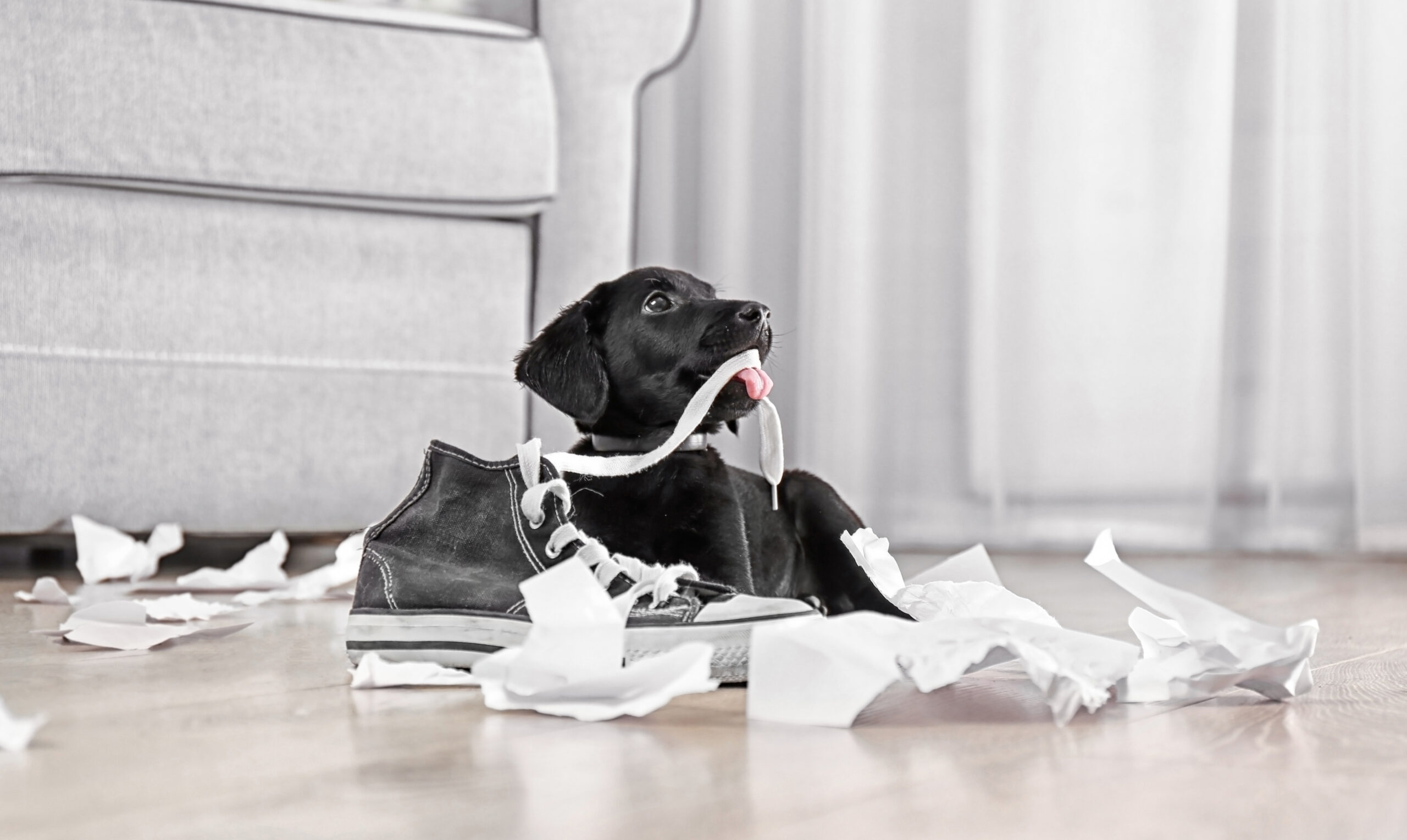
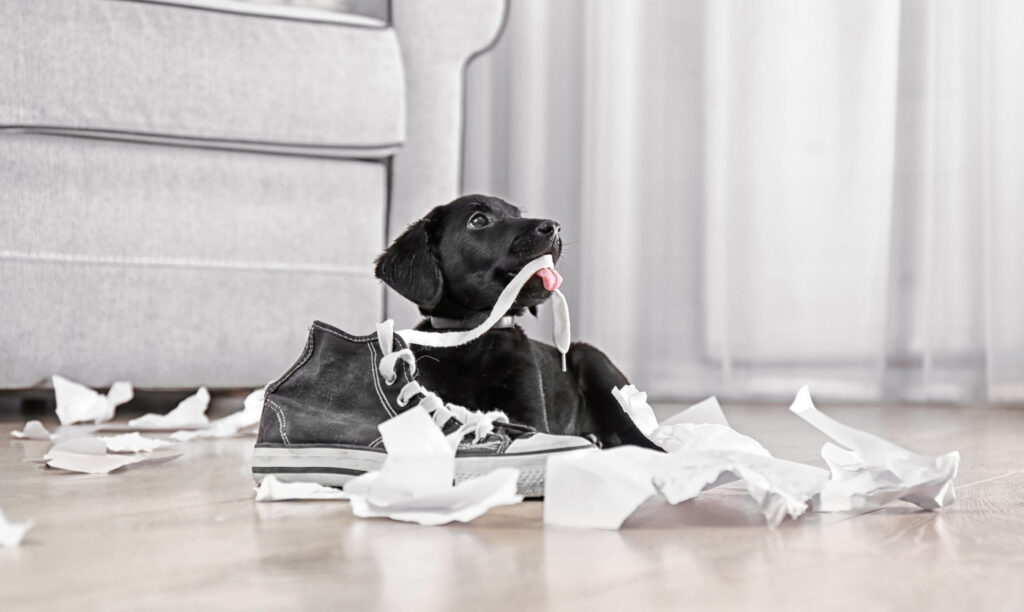
- Keeps your dog safe when you can’t supervise them, and keeps them from finding rewards in destructive behavior while keeping bite marks off your rugs, shoes and baseboards.
- Gives you a much need break to still have time for your personal needs like taking a shower, going to the grocery store and overall, not becoming a prisoner in your home.
- Space in the crate is very important for potty training. You want just enough space for your pup to be able to completely turn around and lay down. As potty training goes well, you should be able to expand the space in the crate a few inches each week. If you ever have an accident, don’t panic, just reduce the size again for a few days and resume
- Location of the crate can vary depending on what works best for your pup. Usually a common area in your home is best so your pup feels a part of your pack. Keep in mind that sometimes the environment can be too overwhelming. A dark location that is quieter might be more comforting.
- Add items to the crate to create value for spending time inside such as meals, bones and toys of different textures.
- Cover the crate with a dark sheet or blanket to help reduce distractions.
- Reward your dog for small amounts of calmer, more quiet behavior by tossing high-value food into the crate.
- Only approach the crate or open the door when your pup calms down, so these actions become a reward for calmer behavior.
#5 – GOLDEN WINDOW OF SOCIALIZATION
Proper socialization includes much more than just meeting new dogs and people. To give your puppy the best start to life, building confidence is a variety of experiences is critical. The golden window exists until puppies are about sixteen weeks of age. They typically have more curiosity and less fear of the world.
We’ve all experienced dogs who jump on us when we walk in a friend’s house, you’ve seen dogs barky at the end of a leash and their owners repeatedly apologizing for their dog’s behavior. With a new puppy you have a small window to get your puppy moving in the right direction with the least amount of work.
- Expose your puppy to new dogs (fully vaccinated and trust-worthy around puppies) and new people of different genders, who are wearing coats, hats, have beards, etc
- Have them walk on different textures – grass, mulch, rocks, solid-surface flooring
- Take them to new stores, new houses, in the car, on walks around your neighborhood so they can hear sounds, smell all that life has to offer and overall gain curiosity in exploring their environment
Introduce them to new experiences slowly and in short periods of time. Take high-value food with you to reward for exploration or help create more positive associations with experiences that may be a little overwhelming.
Looking for more help with your puppy! Download our Great Start Puppy Guide for numerous additional tips and trainer-suggested ideas to help make this phase of your puppy’s life more enjoyable.
When you are ready for more formalized training, at Full House Dog Training, we are the puppy experts! With over a decade of training experience and a deep knowledge of puppy development from birth to adolescents, combined with our proven emotional-based training system, we are your trusted partner in helping you learn to enjoy living life with your dog!