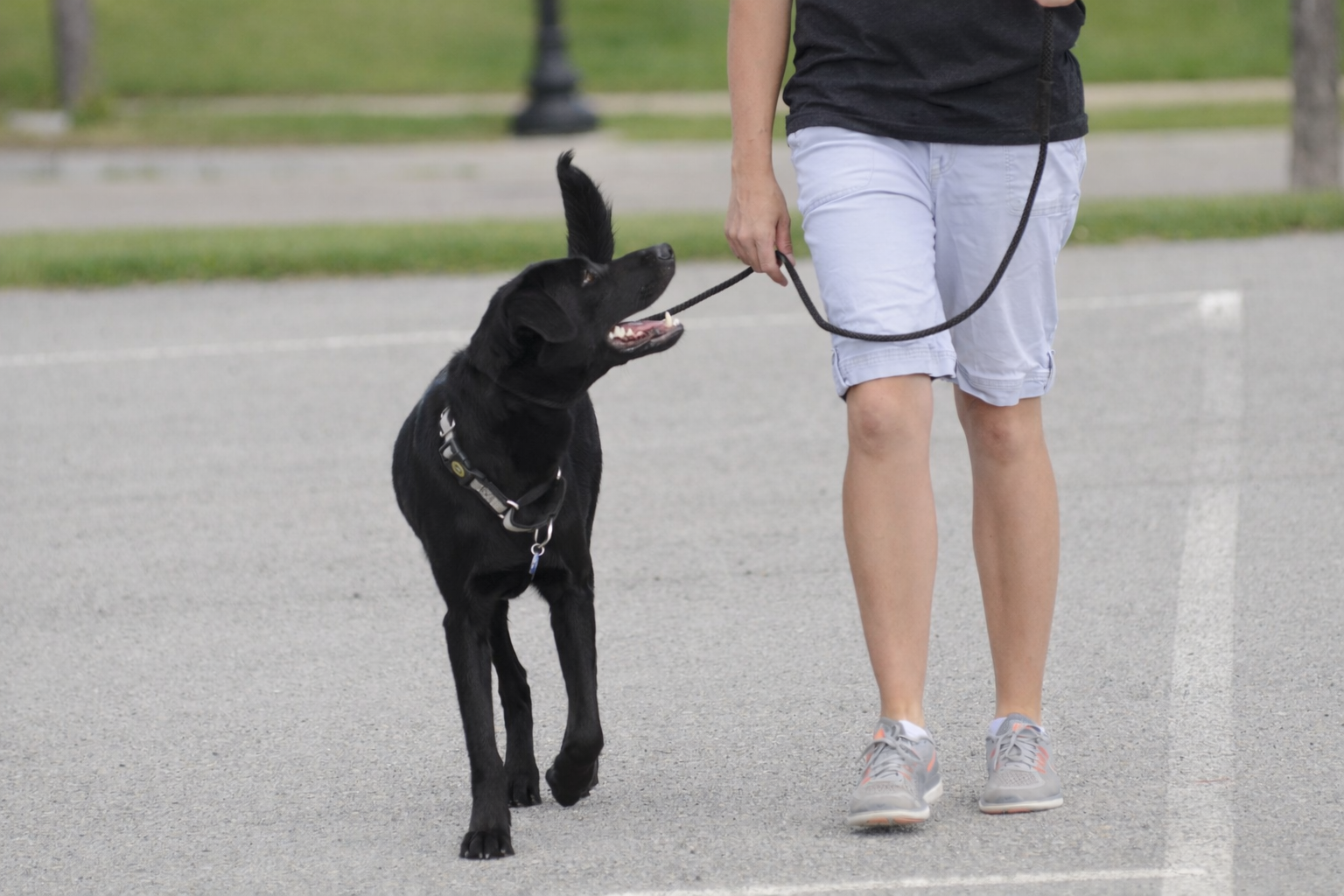

One of the greatest skills you can teach a dog is to have an off switch. An off switch means the dog can self-soothe, can be independent during calmer moments in your home, and quickly recover from excitement in the environment such as when the doorbell rings or they see another dog on a walk.
A simple way to give dogs opportunities to practice this skill is through tethering or back-tying. Tethering is a structured exercise designed to help dogs build independence, practice self-soothing, and relax calmly while in the presence of their owner without constant engagement. This exercise supports emotional regulation and teaches the dog how to settle even when freedom of movement is temporarily limited.
Equipment Needed
- Flat buckle collar or well-fitted harness
- Standard leash
- Immovable anchor point (heavy furniture, inside door knob, main railing post, etc.)
- Dog bed or other soft resting surface
- Appropriate enrichment items (bones, safe chews, toys)
How to Set Up the Tether
- Attach the leash to your dog using a flat buckle collar or harness.
- Secure the handle of the leash to an immovable object.
- Place a bed or soft surface at the anchor point to create a designated resting area.
- Offer calming enrichment items (bones, toys, etc.) on the bed to help your dog settle.
The tethered area should always be in the same room or general space where you are spending time.
Guidelines for Tethering Sessions
- Your dog should not be left alone while tethered.
- Sessions can be repeated multiple times per day.
- Session length depends on your dog’s ability to cope calmly with the lack of freedom. Start short and gradually increase duration as your dog shows improved relaxation.
- During tethering, aim to give your dog approximately 25% of your attention. This means you should be multitasking—working, reading, cooking, watching TV—rather than engaging directly with your dog the entire time.
The goal is for your dog to learn how to relax without relying on constant interaction from you.
Rewarding for Relaxation
To accelerate your dog’s ability to self-soothe and remain calm, you will use a process called Rewarding for Relaxation (RR).
Key Principles of RR:
- You are rewarding emotional calmness, not commands.
- Think of this process walking down a set of stairs.
- In each session, reward the same level of calm behavior 2–3 times, then slightly increase the criteria before rewarding again.
Behaviors to Reward
Look for and reward signs that your dog is becoming more relaxed and emotionally settled, including:
- Calming signals such as:
- Yawning
- Shaking off
- Lip licking
- Soft eye contact
- Reduced pacing
- Reduced barking or whining
- Increased curiosity about the environment
- Sitting or lying down calmly
Rewards should be delivered calmly and without excitement, reinforcing the overall relaxed emotional state.
What Success Looks Like
Over time, your dog should be able to:
- Settle more quickly during tethering sessions
- Show fewer stress-related behaviors
- Spend more time resting calmly on their bed
- Demonstrate improved independence while remaining comfortable near you
This exercise is not about restricting your dog—it’s about teaching them how to feel safe, calm, and confident even when they don’t have full freedom of movement. Consistency and patience are key.
Value of This Exercise
Tethering provides dogs with an important opportunity to practice emotional regulation in a safe, supported way. By remaining physically connected to an anchor point while still near their owner, dogs learn that they can settle and feel secure in a slightly elevated level of stress created by the lack of freedom and separation from activity in the environment. Dogs also begin to learn the value of their choices as they receive rewards from calmer behaviors and emotionally elevated behaviors are ignored.
Need more support learning how to enjoy life with your dog! Reach out to Full House Dog Training and learn more about our emotional-based training approach that has helped thousands of dog owners just like you learn to create a calmer relationship with their dog.