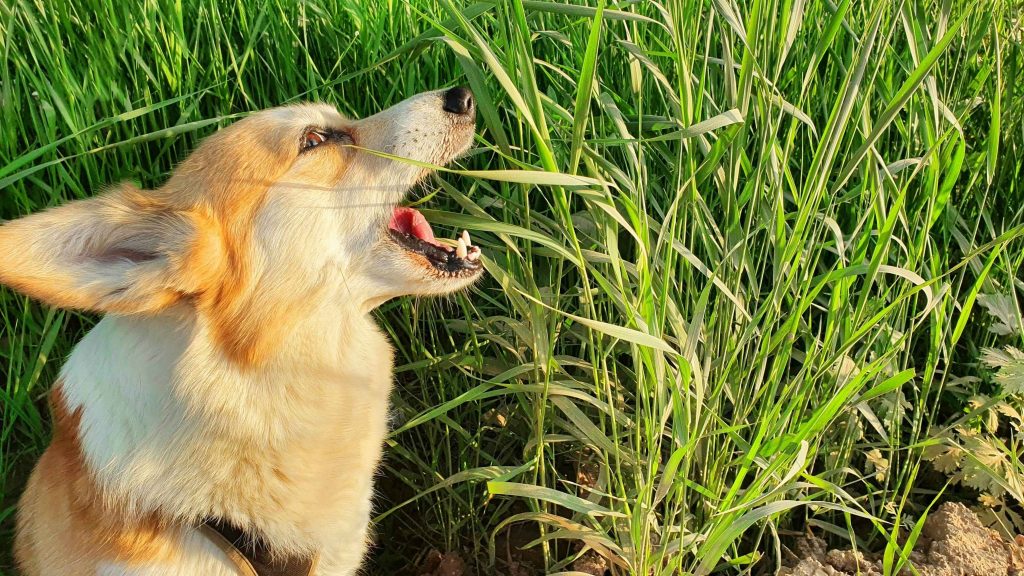
One of the most common questions dog owners ask us, “Why does my dog eat grass?” It can seem harmless, confusing, or a little alarming depending on how often it happens. Some dogs casually nibble a few blades here and there. Others seem determined to graze or pull clumps out of the lawn every time they go outside. And of course, many owners worry that grass eating means their dog is sick.
The truth is, grass eating can happen for a few different reasons. Sometimes it is relatively harmless. Sometimes it points to an unmet need. And sometimes it is your dog’s way of telling you that something deeper is going on.
At Full House Dog Training, we always encourage owners to look beyond the surface of behavior. Whether we are working on dog training, puppy training, obedience training, or helping families navigate stress-related habits, our goal is not just to stop the behavior. It is to understand why it is happening in the first place. That is where real change begins.
So, let’s look at three common reasons this could be happening:
1. Your Dog May Be Missing Something in Their Diet
One possible reason dogs eat grass is that their body is seeking nutrients they are not getting enough of from their regular food. This does not always mean a dog is on a “bad” diet, but it can mean their nutrition is not fully meeting their individual needs.
When people think about nutrition, they often focus on protein, fat, and carbohydrates. But micronutrients matter too. Vitamins, minerals, trace elements, and other small nutritional building blocks support digestion, immune health, skin and coat quality, energy, and overall wellness. If a dog is low in certain nutrients, they may start seeking other sources in their environment.
Grass is not exactly a perfect supplement, but dogs do not always make the best nutritional choices. They simply respond to instinct and internal drive. Some dogs may be drawn to grass because their body is looking for fiber, plant matter, or nutrients connected to digestive support.
This is especially important to think about in puppy training. Puppies are growing fast, developing rapidly, and need balanced nutrition to support both body and brain. If a young dog is repeatedly eating grass, it is worth taking a closer look at their food, treats, chews, and overall feeding routine. The same goes for adult dogs whose diet may be technically complete, but still not ideal for them.
Nutritional gaps can also show up alongside other symptoms such as:
- dull coat
- itchy skin
- inconsistent stools
- low energy
- chronic licking or chewing
- frequent digestive upset
That does not automatically mean nutrition is the issue, but it is part of the bigger picture.
One of the things we emphasize in dog training is that behavior and wellness are connected. A dog who feels physically off is less likely to make calm, stable choices. That is one reason our approach goes beyond obedience, striving for self-reliance. We are not just looking for a dog to follow commands. We want dogs to feel better, cope better, and make naturally better decisions.
What to do:
Start by evaluating your dog’s diet honestly. Is it high quality? Is it appropriate for their age, lifestyle, and health status? Have there been changes in appetite, stool, coat, or energy? If your dog is eating grass often, it may be worth talking with your veterinarian about food quality, nutrient balance, and whether additional support for digestion or micronutrients makes sense.
2. Boredom Can Turn Grass Eating Into a Rewarding Habit
Sometimes dogs eat grass for a much simpler reason: it gives them something to do.
Dogs are natural foragers. They explore with their mouth, nose, and body. If a dog is under-stimulated, grass can become part entertainment, part sensory enrichment, and part self-rewarding behavior. It feels interesting. It breaks up the monotony. It may even get a reaction from the owner, which can make it even more rewarding.
This is especially common in dogs who do not have enough physical exercise, mental stimulation, structured engagement, or clear outlets for natural behavior. A bored dog will find a job. If we do not provide one, they usually invent one. Grass eating can be one of those invented hobbies.
In puppy training, this shows up a lot. Puppies are curious, busy, and constantly experimenting with the world. Grass, mulch, leaves, sticks, and dirt all become part of the adventure. If no one redirects that curiosity productively, the habit can become stronger over time.
Adult dogs can fall into this pattern too, particularly if they spend a lot of time in the backyard without interaction. What starts as casual exploration can become a routine. Then the routine becomes a habit. Then the habit becomes the default behavior every time they are outside.
This is where training matters. Not because we want to micromanage every outdoor moment, but because we want to help dogs develop healthier patterns. A big part of effective dog training is teaching owners how to meet needs before frustration or boredom turns into unwanted behavior.
That is also why our work is about reducing family stress, increasing joy. When owners understand what is driving a behavior, they stop feeling embarrassed or frustrated and start feeling empowered. Instead of constantly correcting the dog, they can proactively create better routines.
Signs boredom may be part of the issue:
- your dog mainly eats grass when left alone outside
- it happens most when there is nothing else going on
- your dog also digs, chews, paces, or barks from boredom
- the behavior is more common in young, energetic, or under-exercised dogs
What to do:
If boredom is contributing, the solution is not just “tell them no.” The solution is to make outside time more meaningful. Structured walks, sniffing opportunities, food puzzles, play sessions, training games, and interactive routines can all reduce the need for dogs to create their own fun by grazing. Also, working on deeper emotional relaxation through targeted techniques so they can relax in a wide variety of environments, including the back yard, without needing to constantly be occupying their busy mind.
This is also where a group class can be incredibly helpful. A good group class does more than teach sit and down. It helps dogs learn how to focus, regulate excitement, work around distractions, and engage with their owner in a productive way. That kind of structure carries over into everyday life and can reduce a lot of random nuisance behaviors.
3. Grass Eating Can Be Linked to GI Issues, Gut Imbalance, or Parasites
The third common reason dogs eat grass is digestive discomfort. Some dogs seem to seek out grass when their stomach feels unsettled. Others may do it because their gut is imbalanced and they are trying to self-soothe or respond to internal discomfort.
This is where things get a little more serious.
A healthy digestive system depends on proper balance in the gut. Dogs need healthy bacteria in the digestive tract to support digestion, immune function, stool quality, and overall health. If that gut bacteria is out of balance, dogs may experience gas, loose stool, stomach upset, nausea, or odd food-seeking behaviors.
Grass eating does not always mean GI trouble, but repeated or intense grass eating can definitely be associated with digestive issues. Some dogs also vomit after eating grass, which leads owners to wonder whether the dog is trying to make themselves throw up. That can happen, but it is not always the case. Sometimes the dog eats grass because the stomach already feels off. The vomiting is a result, not the goal.
Parasites are another possibility. Intestinal parasites can irritate the digestive system, disrupt nutrient absorption, and leave dogs feeling uncomfortable. Puppies are especially vulnerable, which is one more reason close observation matters during puppy training and early development. A puppy dealing with worms or digestive imbalance may show unusual eating behaviors, poor stool quality, bloating, or changes in appetite.
Dogs with GI-related grass eating may also show:
- frequent licking of lips
- eating grass frantically rather than casually
- vomiting
- diarrhea or inconsistent stool
- visible discomfort after meals
- scooting, bloating, or changes in appetite
This is one of those moments where obedience training alone is not the answer. You can train a dog not to dive into the lawn on cue, but if the underlying problem is stomach discomfort, the urge is still there. That is why long-term success comes from looking at the whole dog, not just the behavior.
At Full House, we believe in partnership in transformation. That means we help owners learn how to read what their dog is communicating and when to bring in the right support. Training is powerful, but it works best when it is paired with good health awareness and a strong owner-dog relationship.
What to do:
If your dog suddenly starts eating more grass than usual, or if the behavior comes with vomiting, diarrhea, weight loss, lethargy, or appetite changes, it is time to check in with your veterinarian. A fecal test, diet review, and general health evaluation can help rule out parasites or digestive imbalance.
What Is Normal and When Should You Worry?
Occasional grass eating is fairly common. Many dogs do it at some point, and not every case is an emergency. But frequency, intensity, and context matter.
You should pay closer attention if:
- the behavior is increasing
- your dog seems obsessed with eating grass
- it happens alongside vomiting or diarrhea
- your dog seems uncomfortable
- you suspect low-quality diet or poor digestion
- your dog may have been exposed to parasites
- the grass may have pesticides, herbicides, or chemicals on it
It is also worth remembering that not all lawns are safe. Even if the grass eating itself is not dangerous, treated grass can be. Chemicals, fertilizers, and pest control products can create very real risks.
3 Practical Ways to Help Your Dog Stop Eating Grass So Often
Here are three simple, realistic ways you can start addressing this behavior in daily life:
1. Upgrade engagement, not just exercise
A long walk is great, but mental stimulation matters too. Add sniff walks, short training sessions, food puzzles, and interactive play. Many dogs need more brain work, not just more miles. This helps with dog training, puppy training, and reducing boredom-based habits.
2. Review nutrition and digestion
Take a closer look at what your dog eats every day. Consider food quality, treats, supplements, stool consistency, and overall wellness. If something feels off, talk with your vet. This matters for everything from puppy potty training to skin health to behavior regulation, because dogs who feel better physically often behave better too.
Review our blog article on proper nutrition for your dog >>https://www.fullhousedogtraining.com/how-high-quality-dog-nutrition-optimizes-behavior-another-missing-link-in-training-success/
3. Teach a better outdoor routine
Do not just send your dog outside and hope for the best. Go with them. Practice engagement. Reward check-ins. Interrupt random grazing before it becomes the main event. This is where structured obedience training and even a well-run group class can help create better habits fast.
A Final Thought
Grass eating is one of those dog behaviors that can seem random, but it usually is not. Whether your dog is dealing with a nutritional gap, boredom, habit-building, digestive imbalance, or even a parasite, the behavior is worth paying attention to.
The goal is not just to stop your dog from eating grass. The goal is to understand what need is underneath it.
That is the difference between surface-level training and true transformation. In real dog training, we do not just correct behavior. We build healthier dogs, more confident owners, and more peaceful homes. From puppy training and puppy potty training to obedience training, group class success, and support for stress-related behaviors like separation anxiety, the big picture always matters.
When we pay attention to what our dogs are telling us, we can make better choices for them. And when we support the whole dog — body, mind, and emotions — better behavior becomes much more natural.
If your dog is eating grass often and you are not sure what is driving it, that is a good sign to slow down and take a closer look. The answer may be simpler than you think, and getting it right can make a big difference in your dog’s comfort and your peace of mind.